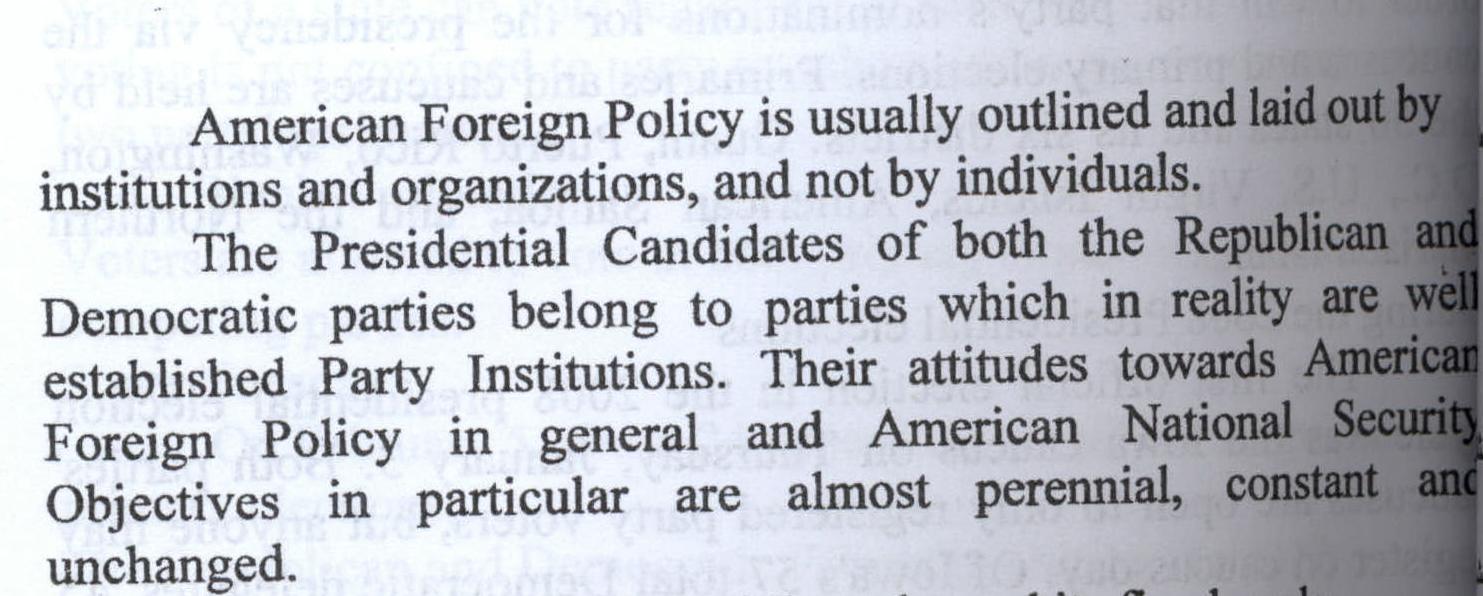
American Presidential Elections- Mechanism and campaign Issues with special reference to 2008-2012 elections


The neutrophil/ lymphocyte ratio (NLR) and platelet/lymphocyte ratio (PLR) have the potential to be inflammatory markers that reflect the activity of many inflammatory diseases. The aim of this study was to evaluate the NLR and PLR as potential markers of disease activity in patients with ankylosing spondylitis.
The study involved 132 patients with ankylosing spondylitis and 81 healthy controls matched in terms of age and gender. Their sociodemographic data, disease activity scores using the Bath Ankylosing
 (43)
(43)
 (37)
(37)


Streamlined peristaltic transport patterns, bifurcations of equilibrium points, and effects of an inclined magnetic field and channel are shown in this study. The incompressible fluid has been the subject of the model's investigation. The Reynolds values for evanescence and an infinite wavelength are used to constrain the flow while it is being studied in a slanted channel with a slanted magnetic field. The topologies over their domestic and cosmopolitan bifurcations are investigated for the outcomes, and notion of the dynamical system are employed. The Mathematica software is used to solve the nonlinear autonomous system. The flow is found to have three different flow distributions namely augmented, trapping and backward flow. Outc
... Show More
(1)
(1)
(6)
(8)
The objective of this experiment was to determine the effects of dietary supplementation with different fat sources on blood parameters of Japanese quail (Coturnix coturnix japonica). Eighty four 7-week old laying quail were randomly assigned to 4 treatment groups (21 birds per group) with 3 replicates for each treatment group and fed for three months on a commercial diet supplemented with 3% of either sunflower oil (T1), flax oil (T2), corn oil (T3) or fish oil (T4). The birds received water and feed ad libitum during the experiment. During the last month of experiment blood samples were collected fortnightly from each bird. The first blood samples collection was used to determine fresh blood parameters, while the second blood samples coll
... Show More
(15)
The current study was designed to evaluate the anti-inflammatory effect of GKB in the rat model of granulomatous inflammation. Thirty rats were distributed into five groups: The first group served as negative control group that received distilled water (DW) only without inducting inflammation, positive control group; treated with DW with the induction of inflammation and they were assigned to cotton pellet-induced granuloma, ginkgo biloba (GKB) treated group (200mg/kg/day), dexamethasone-treated group (1mg/kg), and Prednisolone treated group (5mg/kg). All the treatments were given orally for seven consecutive days. On day eight, the rats were anesthetized and the pellets together with granulation tissue were carefully removed
... Show More
(9)
(5)
(11)
(10)
Channel estimation (CE) is essential for wireless links but becomes progressively onerous as Fifth Generation (5G) Multi-Input Multi-Output (MIMO) systems and extensive fading expand the search space and increase latency. This study redefines CE support as the process of learning to deduce channel type and signal-tonoise ratio (SNR) directly from per-tone Orthogonal Frequency-Division Multiplexing (OFDM) observations,with blind channel state information (CSI). We trained a dual deep model that combined Convolutional Neural Networks (CNNs) with Bidirectional Recurrent Neural Networks (BRNNs). We used a lookup table (LUT) label for channel type (class indices instead of per-tap values) and ordinal supervision for SNR (0–20 dB,5-dB steps). T
... Show More
The present study aimed to asspssment the nutrition a program to sample of student from internal departments of Baghdad University (AL-Jadiriya Complex) and the University of AL-MustanSiriya four grades and aged (19-24) year study included 150 male and female students by (75) male and (75) of female register height, weight nd body mass index were study habits and food pattern of the same sample (150) and by aspecial form and take the personal information interviews and record information on food intake during 24 hour .noted adifference practie in the weights and longths of male and female (sample).
BMI rates were within the normal weight as the value of BMI for males aged (19- 21)and (22-24) and (22.21) and (23,37),respectively and th
Background: This study was conducted among diabetic persons to assess the sweet and salty taste sensitivity with its effect on gingival health in relation to salivary serotonin levels. Materials and methods: A cross-sectional comparative study design was used. All patients with diabetes aged 12-14 years that attend the Paediatric hospital at Baghdad medical city with specific inclusion criteria were involved in the sample of the present study (patients group 50 patients) compared with non-diabetic persons matched in age and gender of the study sample (control group 70 patients) who were attending dental unit in the college of dentistry/university of Baghdad. A two-alternative forced choice question including each component presented at f
... Show More
(2)
(2)
This study was conducted at the poultry farm located in the College of Agricultural Engineering Sciences, University of Baghdad, Abu Gharib (the old site), and laboratories of the Animal Production Department, Jadriya, to investigate the effect of adding hydrogen peroxide H2O2 at nanoscale levels to semen diluents of local roosters sperm in a number of semen characteristics. In this study, 80 roosters local Iraqi chickens were used, the roosters were trained three times a week, to collect semen, until the largest number of them responded. Then the best 40 of the roosters were elected for the purpose of collecting the semen with a pooled sample, and then the samples were diluted and divided equally into four parts. The concentrations of 0, 1
... Show More
(3)