Preferred Language
Articles
/
ijcpe-701
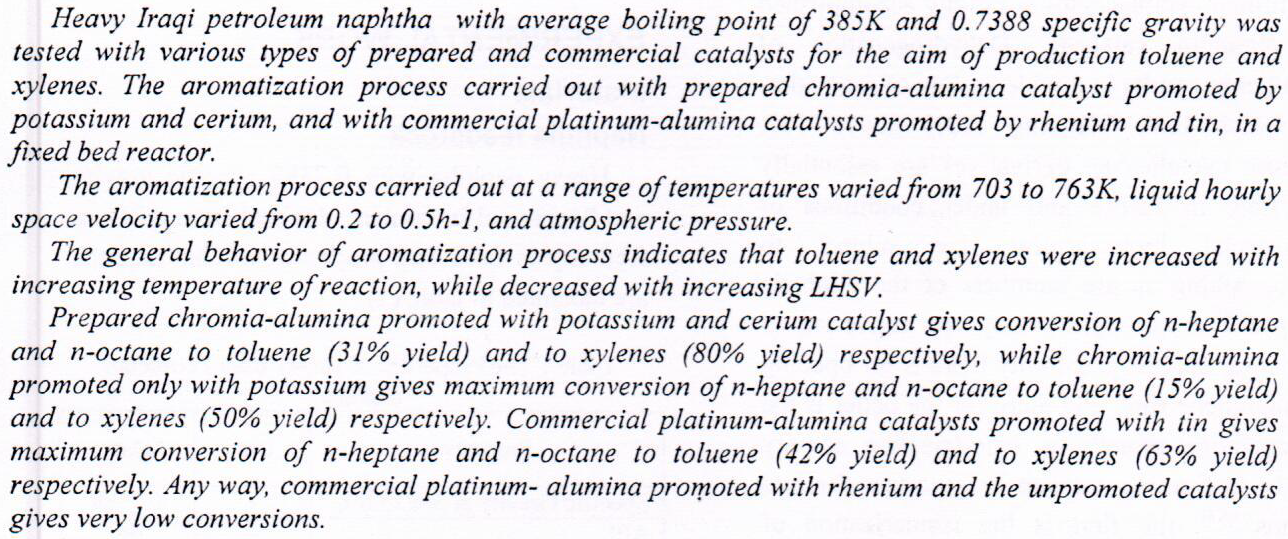
Catalytic Aromatization of Naphtha using Different Catalysts
...Show More Authors

View Publication Preview PDF
Quick Preview PDF
Publication Date
Wed Dec 13 2017
Journal Name
Al-khwarizmi Engineering Journal
Enhancing the Compressive Strength and Density of Cement Mortar by the Addition of Different Alignments of Glass Fibers and Styrene Butadiene Rubber
...Show More Authors

Abstract

In the field of construction materials the glass reinforced mortar and Styrene Butadiene mortar are modern composite materials. This study experimentally investigated the effect of addition of randomly dispersed glass fibers and layered glass fibers on density and compressive strength of mortar with and without the presence of Styrene Butadiene Rubber (SBR). Mixtures of 1:2 cement/sand ratio and 0.5 water/cement ratio were prepared for making mortar. The glass fibers were added by two manners, layers and random with weight percentages of (0.54, 0.76, 1.1 and 1.42). The specimens were divided into two series: glass-fiber reinforced mortar without SBR and glass-fiber reinforced mortar with 7% SBR of mixture water. All s

... Show More
View Publication Preview PDF
Crossref
Publication Date
Fri Dec 01 2023
Journal Name
Iraqi Journal Of Physics
Study of the Optical Properties of 3MPA CdTe and 3MPA CdTe/CdSe Quantum Dots at PH 12 in Different Periods of Time
...Show More Authors

This research aims to study the optical characteristics of semiconductor quantum dots (QDs) composed of CdTe and CdTe/CdSe core-shell structures. It utilizes the refluxed method to synthesize these nanoscale particles and aims to comprehend the growth process by monitoring their optical properties over varied periods of time and pH 12. Specifically, the optical evolution of these QDs is evaluated using photoluminescence (PL) and ultraviolet (UV) spectroscopy. For CdTe QDs, a consistent absorbance and peak intensity increase were observed across the spectrum over time. Conversely, CdTe/CdSe QDs displayed distinctive absorbance and peak intensity variations. These disparities might stem from irregularities in forming selenium (Se) layers a

... Show More
View Publication Preview PDF
Crossref (1)
Crossref
Publication Date
Fri Jan 01 2010
Journal Name
Journal Of Kerbala University
Effect of different levels of urea and superphosphate fertilizers on some morphological and physiological characters of fenugreek plant (Trigonella foenum-graecum L.)
...Show More Authors

An experiment was conducted using pots (capacity of 4 kg soil/pot) in the glasshouse of Biology Dept. College of Education (Ibn Al-Haitham) University of Baghdad during 2008-2009 growing season, in order to determine the effect of different levels of urea fertilizer (Zero, 0.1, 0.2, 0.4 gm/4 kg soil in pot) these equal to (Zero, 100,200,400 kg/ha) and different levels of superphosphate fertilizer (Zero, 0.1, 0.2 gm/4kg soil in pot), these equal to (Zero, 100,200 kg/ha) on some morphological and physiological characteristics of fenugreek plant. This experiment was conducted using Completely Randomized Design (CRD) with three replications and the experiment included (36) pots. Results indicated clear increase in all studied characteristics wi

... Show More
Publication Date
Wed Jan 01 2025
Journal Name
Lecture Notes In Networks And Systems
Diagnosis of Diabetes Using Artificial Intelligence Programs
...Show More Authors

Scientific development has occupied a prominent place in the field of diagnosis, far from traditional procedures. Scientific progress and the development of cities have imposed diseases that have spread due to this development, perhaps the most prominent of which is diabetes for accurate diagnosis without examining blood samples and using image analysis by comparing two images of the affected person for no less than a period. Less than ten years ago they used artificial intelligence programs to analyze and prove the validity of this study by collecting samples of infected people and healthy people using one of the Python program libraries, which is (Open-CV) specialized in measuring changes to the human face, through which we can infer the

... Show More
View Publication Preview PDF
Scopus (1)
Scopus Crossref
Publication Date
Sat Dec 15 2018
Journal Name
Journal Of Baghdad College Of Dentistry
The relation of maxillary root apices and the maxillary sinus floor among patients with different skeletal patterns in Iraqi samples
...Show More Authors

Background: Understanding the morphological characteristics between the floor of the maxillary sinus and the tips of the maxillary posterior roots is crucial in orthodontics involving diagnosis and treatment planning. The aim of this study was to evaluate the distances from the maxillary posterior root apices to the inferior wall of the maxillary sinus, thickness and density of maxillary sinus floor using cone-beam computed tomography images and the relationships between roots and maxillary sinus according to gonial angle and skeletal pattern. Materials and methods: Three-dimensional images of each root were checked, and the distances were measured along the true vertical axis from the apex of the root to the sinus floor, and the thickne

... Show More
View Publication Preview PDF
Crossref
Publication Date
Thu Jan 29 2026
Journal Name
Journal Of Baghdad College Of Dentistry
A study to compare the efficiency of different instrumentation systems for cleaning oval-shaped root canals (An in vitro study)
...Show More Authors

Background: Proper cleaning and shaping of the whole root canal space have been recognized as a real challenge, particularly in oval-shaped canals.This in vitro study was conducted to evaluate and compare the efficiency of different instrumentation systems in removing of dentin debris at three thirds of oval-shaped root canals and to compare the percentage of remaining dentin debris among the three thirds for each instrumentation system. Materials and methods: Fifty freshly extracted human mandibular molars with single straight oval-shaped distal root canals were randomly divided into five groups of ten teeth each. Group One: instrumentation with ProTaper Universal hand instruments, Group Two: instrumentation with ProTaper Universal rotary

... Show More
View Publication Preview PDF
Publication Date
Sun Oct 15 2023
Journal Name
Sumer 3
Treatment of shallow and deep white spot lesions with three different mouthwashes evaluated by laser fluorescence (an in vitro study)
...Show More Authors

This research aims to find how three different types of mouthwashes affect the depth of artificial white spot lesions. Teeth with various depths of white spot lesions were immersed in either splat mouthwash, Biorepair mouthwash, Sensodyne mouthwash, or artificial saliva (control)twice daily for one minute for 4 weeks and 8 weeks at 37°C. After this immersion procedure, lesion depth was measured using a diagnosed pen score. A one-way analysis of variance, Dunnett T3 and Tukey's post hoc α = .05 were used to analyze the testing data. Splat mouthwash enhanced the WSL remineralization and made the lowest ΔF compared with other mouthwashes in shallow and deep enamel after 4 and 8 weeks of treatment. In the repair groups, after 4 weeks

... Show More
View Publication Preview PDF
Crossref (1)
Scopus Crossref
Publication Date
Sun Mar 07 2010
Journal Name
Baghdad Science Journal
Evaluation for the Effect of Heat Stable Enterotoxin (a) Produced by Enterotoxigenic Escherichia coli on Different Cancer Cells In Vitro
...Show More Authors

This study was conducted for evaluating the cytotoxic effect of heat stable enterotoxin a (STa) produced by enterotoxigenic Escherichia coli on the proliferation of primary cancer cell cultures, obtained from tumor samples that were collected from (13) cancer patients and as follows: (five colon cancer patients, two bladder cancer patients, two breast cancer patients, two stomach cancer patients and two lung cancer patients), and on normal cell line (rat embryonic fibroblast / REF) (in vitro) with the use of different concentrations starting from (1) mg/ml and ending with (0.0002) mg/ml by making two fold serial dilutions by using the 96- well microtiter plate, and in comparison with negative (PBS) and positive (MMC, at concentration

... Show More
View Publication Preview PDF
Crossref
Publication Date
Wed Feb 01 2017
Journal Name
Journal Of Natural Gas Science And Engineering
Experimental determination of hydrate phase equilibrium for different gas mixtures containing methane, carbon dioxide and nitrogen with motor current measurements
...Show More Authors

Hydrate dissociation equilibrium conditions for carbon dioxide + methane with water, nitrogen + methane with water and carbon dioxide + nitrogen with water were measured using cryogenic sapphire cell. Measurements were performed in the temperature range of 275.75 K–293.95 K and for pressures ranging from 5 MPa to 25 MPa. The resulting data indicate that as the carbon dioxide concentration is increased in the gas mixture, the gas hydrate equilibrium temperature increases. In contrast, by increasing the nitrogen concentration in the gas mixtures containing methane or carbon dioxide decreased the gas hydrate equilibrium temperatures. Furthermore, the cage occupancies for the carbon dioxide + methane system were evaluated using the Van der Wa

... Show More
Scopus (93)
Crossref (92)
Scopus Clarivate Crossref
Publication Date
Sun Jan 01 2023
Journal Name
Phyton
Toxic and Antifeedant Effects of Different Pesticidal Plant Extracts against Beet Armyworm (<i>Spodoptera exigua</i>)
...Show More Authors

The beet armyworm (BAW), Spodoptera exigua (Lepidoptera: Noctuidae) is a highly destructive pest of vegetables and field crops. Management of beet armyworm primarily relies on synthetic pesticides, which is threatening the beneficial community and environment. Most importantly, the BAW developed resistance to synthetic pesticides with making it difficult to manage. Therefore, alternative and environment-friendly pest management tactics are urgently required. The use of pesticidal plant extracts provides an effective way for a sustainable pest management program. To evaluate the use of pesticidal plant extracts against BAW, we selected six plant species (Lantana camara, Aloe vera, Azadirachta indica, Cymbopogon citratus, Nicotiana tabacum ,

... Show More
View Publication Preview PDF
Scopus (3)
Crossref (5)
Scopus Clarivate Crossref