Determination of Corrosion Parameters for a Cathodic Reaction Complicated by IR Drop Effect in a Flow System

European Chemical Bulletin (ISSN 2063-5346) is a peer-reviewed journal that publishes original research papers, short communications, and review articles in all areas of chemistry. European Chemical Bulletin has eight sections, namely
Abstract: Iatrogenic furcal root perforations are serious complications during dental treatment. This study was aimed to compare the sealing ability of new bioceramic root repair material TotalFill® with the other perforation repair materials (GIC, MTA and Biodentine) using a dye- extraction method.Materials and Methods: Forty extracted, human mandibular molars with non-fused well developed root were collected. Artificial perforations were made from the external surface of the teeth. Then the teeth were randomly divided into 4 experimental groups (n= 10) according to the type of repair material used in this study; Medifil glass ionomercement, TotalFill® bioceramic root repair material, BiodentineTM and MTA Plus. The specimens were then im
... Show MoreThis study deals with the elimination of methyl orange (MO) from an aqueous solution by utilizing the 3D electroFenton process in a batch reactor with an anode of porous graphite and a cathode of copper foam in the presence of granular activated carbon (GAC) as a third pole, besides, employing response surface methodology (RSM) in combination with Box-Behnk Design (BBD) for studying the effects of operational conditions, such as current density (3–8 mA/cm2), electrolysis time (10–20 min), and the amount of GAC (1–3 g) on the removal efficiency beside to their interaction. The model was veiled since the value of R2 was high (>0.98) and the current density had the greatest influence on the response. The best removal efficiency (MO Re%)
... Show More (4)
(4)
 (2)
(2)


The effects of nutrients and physical conditions on phytase production were investigated with a recently isolated strain of Aspergillus tubingensis SKA under solid state fermentation on wheat bran. The nutrient factors investigated included carbon source, nitrogen source, phosphate source and concentration, metal ions (salts) and the physical parameters investigated included inoculum size, pH, temperature and fermentation duration. Our investigations revealed that optimal productivity of phytase was achieved using wheat bran supplemented with: 1.5% glucose. 0.5% (NH4)2SO4, 0.1% sodium phytate. Additionally, optimal physical conditions were 1 × 10⁵ spore/g substrate, initial pH of 5.0, temperature of fermentation 30˚C and fermentation dura
... Show More
(8)
In the present study, magnet silica-coated Ag2WO4/Ag2S nanocomposites (FOSOAWAS) were fabricated via a multistep method to address the drawbacks related to single photocatalysts (pure Ag2WO4 and pure Ag2S) and to clarify the significant influence of semiconductor heterojunction on the enhancement of visible-light-driven organic degradation. Different techniques were performed to investigate the elemental composition, morphology, magnetic and photoelectrochemical properties of the fabricated FOSOAWAS photocatalyst. The FOSOAWAS photocatalyst (1 g/L) exhibited excellent photodegradation efficiency (99.5%) against Congo red dye (CR = 20 ppm) after 140 min of visible-light illumination. This result confirmed the ability of the heterojunction be
... Show More
(94)
This study expands the state of the art in studies that assess torsional retrofit of reinforced concrete (RC) multi-cell box girders with carbon fiber reinforced polymer (CFRP) strips. The torsional behavior of non-damaged and pre-damaged RC multi-cell box girder specimens externally retrofitted by CFRP strips was investigated through a series of laboratory experiments. It was found that retrofitting the pre-damaged specimens with CFRP strips increased the ultimate torsional capacity by more than 50% as compared to the un-damaged specimens subjected to equivalent retrofitting. This indicated that the retrofit has been less effective for the girder specimen that did not develop distortion beforehand as a result of pre-loading. From
... Show More
(7)
(6)

This study aims to determine the reasons for the increase in the frequency of sand and dust storms in the Middle East and to identify their sources and mitigate them. A set of climatic data from 60 years (1960–2022) was analyzed. Sand storms in Iraq are a silty sand mature arkose composed of 72.7% sand, 25.1% silt, and 2.19% clay; the clay fraction in dust storms constitutes 70%, with a small amount of silt (20.6%) and sand (9.4%). Dust and sand storms (%) are composed of quartz (49.2, 67.1), feldspar (4.9, 20.9), calcite (38, 5), gypsum (4.8, 0.4), dolomite (0.8, 1.0), and heavy minerals (3.2, 6.6). Increasing temperatures in Iraq, by an average of 2 °C for sixty years, have contributed to an increase in the number of dust storm
... Show More
(50)
Combining different treatment strategies successively or simultaneously has become recommended to achieve high purification standards for the treated discharged water. The current work focused on combining electrocoagulation, ion-exchange, and ultrasonication treatment approaches for the simultaneous removal of copper, nickel, and zinc ions from water. The removal of the three studied ions was significantly enhanced by increasing the power density (4–10 mA/cm2) and NaCl salt concentration (0.5–1.5 g/L) at a natural solution pH. The simultaneous removal of these metal ions at 4 mA/cm2 and 1 g NaCl/L was highly improved by introducing 1 g/L of mordenite zeolite as an ion-exchanger. A remarkable removal of heavy metals was reported
... Show More
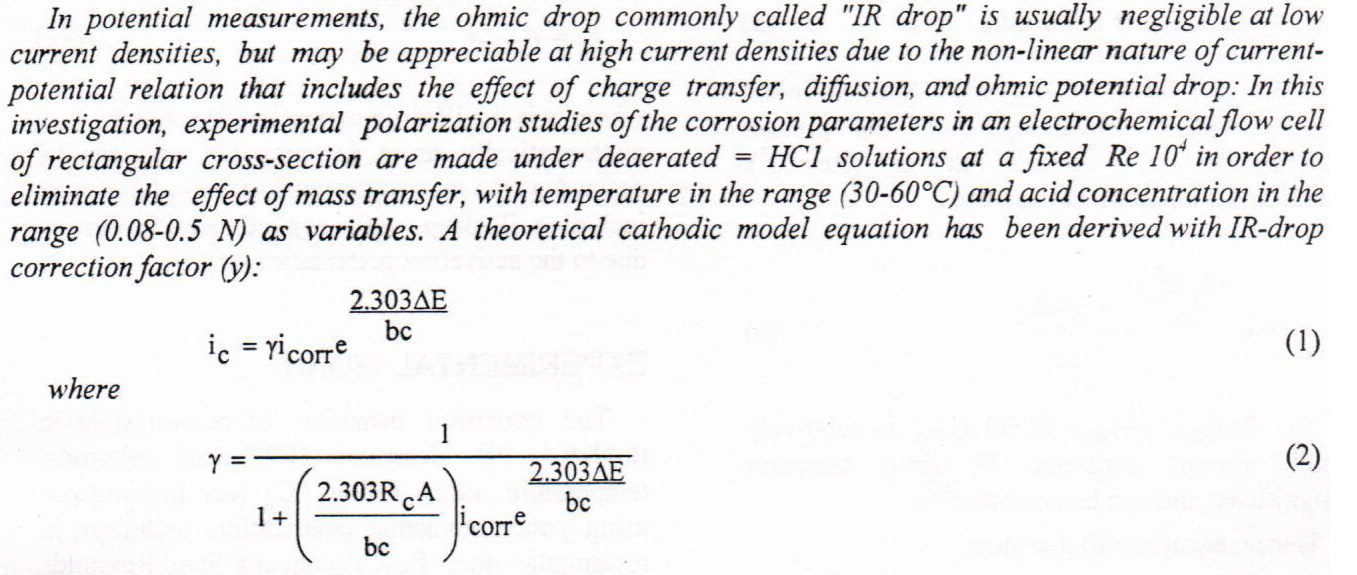
(2)
(1)
(10)
(5)
Laboratory studies were conducted at the biological control unit, college of Agriculture, University of Baghdad to evaluate some biological aspects of the predator Chilocorus bipustulatus (Coleoptera: Coccinellidae), which is considered one of the most important predators on many insect pests, especially the scale insect, Parlatoria blanchardi, (Homoptera: Diaspididae) on date palms. The results showed that biological parameters of the predator were varied according to different degree of temperature. Egg incubation period was significantly different and reached to 7.5 and 5.44 day at 25 and 30°C respectively, Fertility was the same 100% at both temperature degrees. Larval growth periods were 17.41 and 16.12 day as well as the mortality
... Show More