Determination of Corrosion Parameters for a Cathodic Reaction Complicated by IR Drop Effect in a Flow System

Production logging is used to diagnose well production problems by evaluating the flow profile, entries of unwanted fluids and downhole flow regimes. Evaluating wells production performance can be easily induce from production logs through interpretation of production log data to provide velocity profile and contribution of each zone on total production. Production logging results supply information for reservoir modeling, provide data to optimize the productivity of existing wells and plan drilling and completion strategies for future wells. Production logging was carried out in a production oil well from Mishrif formation of West Qurna field, with the objective to determine the flow profile and fluid contributions from the perforations af
... Show MoreIn the present work, a closed loop circulation system consist of three testing sections was designed and constructed. The testing sections made from (3m) of commercial carbon steel pipe of diameters(5.08, 2.54 and 1.91 cm) . Anionic surfactant (SDBS )with concentrations of (50, 100, 150, 200 and 250 ppm) was tested as a drag reducing agent. The additive(SDBS)studied using crude oil from south of Iraq. The flow rates of crude oil were used in 5.08 and 2.54 cm I.D. pipes are (1 - 12) m3/hr while (1-6) m3/hr were used in 1.91 cm J .D. pipe . Percentage drag reduction (%Dr) was found to increase by increasing solution velocity, pipe diameter and additives concentration (i.e. increasi
... Show MoreProduction logging is used to diagnose well production problems by evaluating the flow profile, entries of unwanted fluids and downhole flow regimes. Evaluating wells production performance can be easily induce from production logs through interpretation of production log data to provide velocity profile and contribution of each zone on total production. Production logging results supply information for reservoir modeling, provide data to optimize the productivity of existing wells and plan drilling and completion strategies for future wells. Production logging was carried out in a production oil well from Mishrif formation of West Qurna field, with the objective to determine the flow profile and fluid contributions from the perforations af
... Show MoreThis paper presents a numerical simulation of the flow around elliptic groynes by using CFD software. The flow was simulated in a flume with 4m long, 0.4m wide, and 0.175m high with a constant bed slope. Moreover, the first Groyne placed at 1m from the flow inlet with a constant the Groyne height of 10cm and a 1cm thickness, and the width of Groynes equals 7cm. A submergence ratio of the elliptic Groynes of 75% was assumed, corresponding to a discharge of 0.0057m3/sec. The CFD model showed a good ability to simulate the flow around Groynes with good accuracy. The results of CFD software showed that when using double elliptic Groy
... Show More (2)
(2)

Background: Pain and the usage of local anesthetic agents are still real problem in pediatric dentistry, for these reasons, the use of minimal invasive dentistry (MID) in regard to the patient comfort is important especially for children, anxious and uncooperative patients. Chemomechanical caries removal (CMCR) methods involve the selective removal of the carious dentine hence it avoided the painful removal of the sound dentine and the anxiety resulted due to the vibration of the hand piece which is also decreased thus it appears to be more acceptable and comfortable to the patient. Aims of this study: This study was conducted among group of children to assess and compare the anxiety rating scale (during and after treatment) between the
... Show More (15)
(14)
(15)
(14)

This paper deals with an up to date problem for oil and gas industry- separation of the gas -fluid fogs. Here is described the worked out physical model of the gas movement process in the sections of the inertial filtering (IF) gas separators. One can find the mathematical model for research of the fields of velocities and pressures in the inertial curvilinear channel. The main simplifications and assumptions are explained. This mathematical model has been made using mathematical program Maple and it is received the 3-d graphic of the distribution componential speed parts in the channel and also 2-d graphics at the channel sectional view when the flow is flat. The new method for gas - fluid systems separation is suggested.
This study examines the relationship between the increase in the number of tourists coming to Tunisia and GDP during the period 1995-2017, using the methodology of joint integration, causal testing and error correction model. The research found the time series instability of the logarithm of the number of tourists coming to Tunisia and the output logarithm but after applying the first differences, these chains become stable, THUS these time series are integrated in the first differences. Using the Johansson method, we found the possibility of a simultaneous integration relationship between the logarithm of the number of tourists coming to Tunisia and the logarithm of GDP in Tunisia, and there is a causal relationship in one direc
... Show More
We propose an intraguild predation ecological system consisting of a tri-trophic food web with a fear response for the basal prey and a Lotka–Volterra functional response for predation by both a specialist predator (intraguild prey) and a generalist predator (intraguild predator), which we call the superpredator. We prove the positivity, existence, uniqueness, and boundedness of solutions, determine all equilibrium points, prove global stability, determine local bifurcations, and illustrate our results with numerical simulations. An unexpected outcome of the prey's fear of its specialist predator is the potential eradication of the superpredator.
(5)
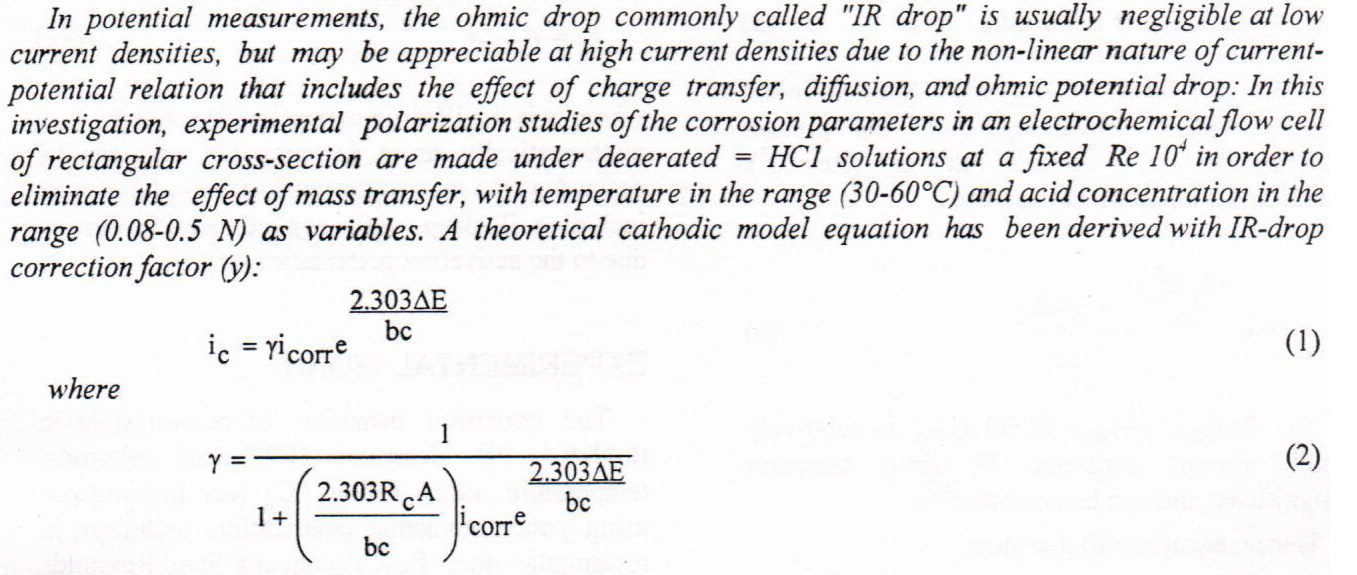
(1)
 (12)
(6)
(12)
(6)