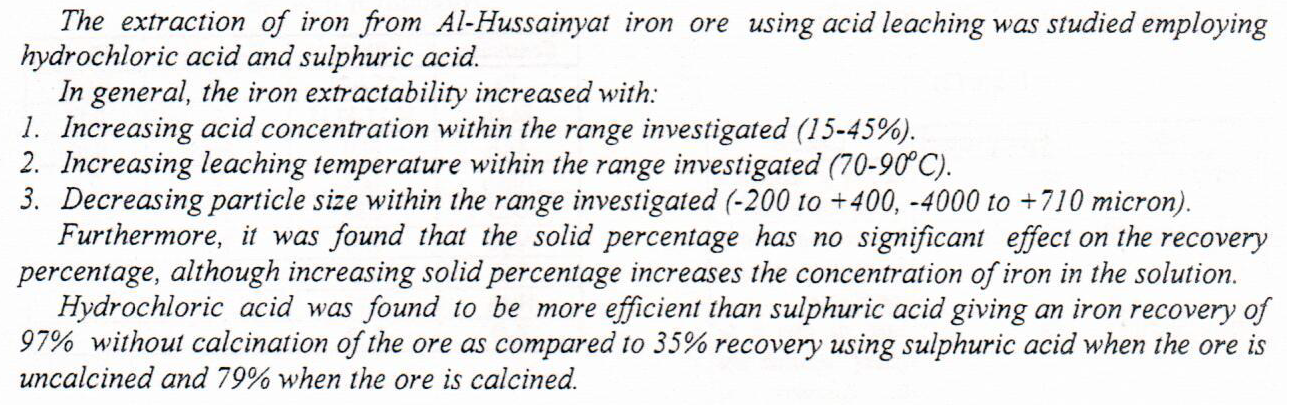
Extraction of Iron from Al-Hussainyat Iron Ore using Acid Leaching

In this research work, the novel polymer base on acrylamide N-methylene lactic and glycolic acid was synthesized and its structural performances were identified by the IR, 1H NMR and 13C NMR spectroscopic investigations. The influencing factors and kinetics of polymerization, viscosity performance were studied and quantum chemical calculations were used to identify the correlation between the structure and properties. It was determined that the polymerization rate of the examined monomers in an aqueous solution, in the presence of DAA, adheres to the standard rules for radical polymerization of acrylamide monomers in solution. An investigation into the pH solution's impact on the kinetics of radical polymerization of acrylamido-N-methyle
... Show More (1)
(1)
 (3)
(3)


Organofluorines, as a pollutant, belongs to a group of substances which are very difficult to neutralize. They are part of many products of everyday use and for this reason they pollute the environment in large quantities. Perfluorinated carboxylic acids are entered into the list of the “Stockholm Convention on Persistent Organic Pollutants” in order to minimize the load on the environment by significantly reducing their use, up to their complete rejection. The DD4 strain was isolated from the soil by the enrichment method and identified using 16S rRNA method as Pseudomonas plecoglossicida. It is able to metabolize perfluorooctanoic acid (PFOA) as the only carbon source in Raymond nutrient medium with a concentration of 1000
... Show More
(12)
(10)
This study investigates the possibility of using waste plastic as one of the components of expired lead-acid batteries to produce lightweight concrete. Different percentages of lead-acid battery plastic were used in the production of lightweight concrete. The replacements were (70, 80 and 100%) by volume of the fine and coarse aggregate. Results demonstrated that a reduction of approximately 23.6% to 35% in the wet density was observed when replacement of 70% to 100% of the natural aggregate by lead-acid battery plastic. Also, the compressive strength decreased slightly with the increase in plastic content at different curing ages of 7, 28, 60, 90, 120 days. The lowest value of compressive strength was (20.7 MPa) for (wa
... Show More
(1)
(2)
(2)
This study aimed at comparing the performance of vertical, horizontal and hybrid subsurface flow systems in secondary treatment for the effluent wastewater from the primary basins at Al-Rustumia wastewater treatment plant, Baghdad, Iraq. The treatments were monitored for six weeks while the testsduration were from 4 to 12 September 2018 under continuous wastewater feeding for chemical oxygen demand (COD), total suspended solid (TSS),ammonia-nitrogen(NH4-N) and phosphate (PO4-P) in comparison with FAO and USEPA standards for effluent discharge to evaluate the suitability of treated water for irrigation purposes. Among the systems planted with Phragmites Australia, the hybrid subsurface flow system which cons
... Show More
(4)
The aim of this research work is to evaluate the use of 980 nm diode laser in clotting the blood
in the bone socket after tooth extraction. The objective is to prevent possible clot dislodgement which is
a defect that may lead to possible infection. A number of rabbits were irradiated using 980nm CW mode
diode laser, 0.86W power output for 9s and 15s exposure time. The irradiated groups were studied
histopathologically in comparison with a control group. Results showed that laser photothermal
coagulation was of benefit in minimizing the possibility of the incidence of postoperative complications.
The formation of the clot reduces the possibility of bleeding and infection.
Key words:Jasminumsambac, Volatile oil, Antioxidant.
(1)
